
Norfolk Island pine (Araucaria heterophylla)

Norfolk Island pine (Araucaria heterophylla)
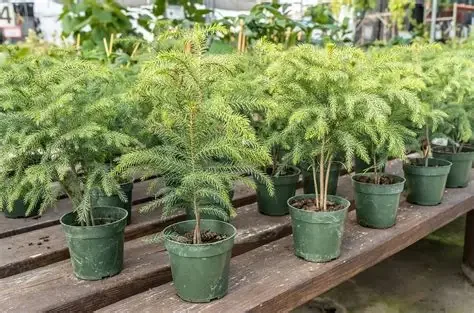
Monthly Theme: Have yourself a very merry Norfolk Christmas! So, you say you don’t want a fake Christmas tree or cut down a real Christmas tree this year, how about a Norfolk Island pine evergreen houseplant?
Newsflash: Despite its name and appearance, the Norfolk Island pine (Araucaria heterophylla) is not a pine tree, It’s actually a relative of the monkey puzzle tree. It is native to Norfolk Island a territory of Australia in the Pacific Ocean. They are commonly called Norfolk pine, Norfolk Island pine or Australian pine.
When I was first married a million years ago, for our first Christmas together, I bought a Norfolk pine. I lovingly decorated it with tiny ornaments and bows. That tree served as our Christmas tree for the next 6-7 years until it passed away of natural causes.
In warmer North America climates, they are cultivated as towering landscape trees. They can grow 200’ tall! In colder climates, like Northeastern Ohio, they can be grown indoor as a miniature tree (3’-8’ tall) or trained as a bonsai plant. During spring and summer, take it outside for an energy boost (wait until it is a steady 65°F). But like me, it’s happier when it’s 75°F!
They require a great deal of sunlight to survive so often normal house lighting is too dim. Try a south-facing window or grow lights. Make sure the room isn’t too cold and water it every two weeks indoors (damp but not soggy). I’d also recommend you test the tree's soil pH and amend as needed. If you really want to make it extra happy, use a humidifier in the room.
If your Norfolk pine gets long and leggy, reduce the amount of fertilizer you are using. Periodically, turn the plant to face the sunlight. If it gets rootbound, repot it into a one size larger pot.
Smarty Plants Fun Facts
Norfolk pine is in the Araucariaceae Family
Soil moist
Soil sandy and acidic pH 4.5 to 5.5
Full sun, 8-hours
20-20-20 fertile during spring/summer
3’-200’ tall, 3’-25’ ft. wide
The More You Grow
Did you know that the Norfolk pine is ranked one of the best air purifying plants?
A Norfolk pine can grow to 7’ in one year, but mine only grew to about 5’ tall in 6-7 years.
WARNING: Norfolk pines are toxic to pets and humans, but I’ve never seen an animal or human try to eat them.
If you have the time, patience, and light, Norfolk pines can be propagated from seeds. If you try to propagate from a cutting, a new branch will not grow in that space. Of course, if there are dead lower branches, cut them off. If it is getting too tall for your space, you can cut the center lead branch off, but it might lose that Christmas tree shape.
Like so many houseplants, the Norfolk pines are susceptible to pests such as mealybugs, mites, aphids and whiteflies. Keep a keen eye out of bugs and treat them quickly. Don’t overwater or they can get an anthracnose fungal disease. Also, air movements around the plant helps to avoid pesty pests. Don’t be afraid to turn on the ceiling fan occasionally.
If the needles turn brown, the hot/cold temperatures might be fluctuating too much or you are either under or overwatering. Watch out for drafty windows or heating vents. If the needles turn yellow, the tree is either getting too much or not enough sunlight. If the needles are dropping, the tree is either being overwatered or not getting enough light. If the branches are drooping, the soil might be too dry. Give it a good thorough watering.
With a little TLC, your Norfolk pine will provide years of delight and become a gorgeous addition to your indoor space. Plus, come December, it will make a lovely living Christmas tree for your friends and family to admire.
Happy Holidays from me to you!
Judith Hilinski