
The Money Tree (Pachira aquatica)
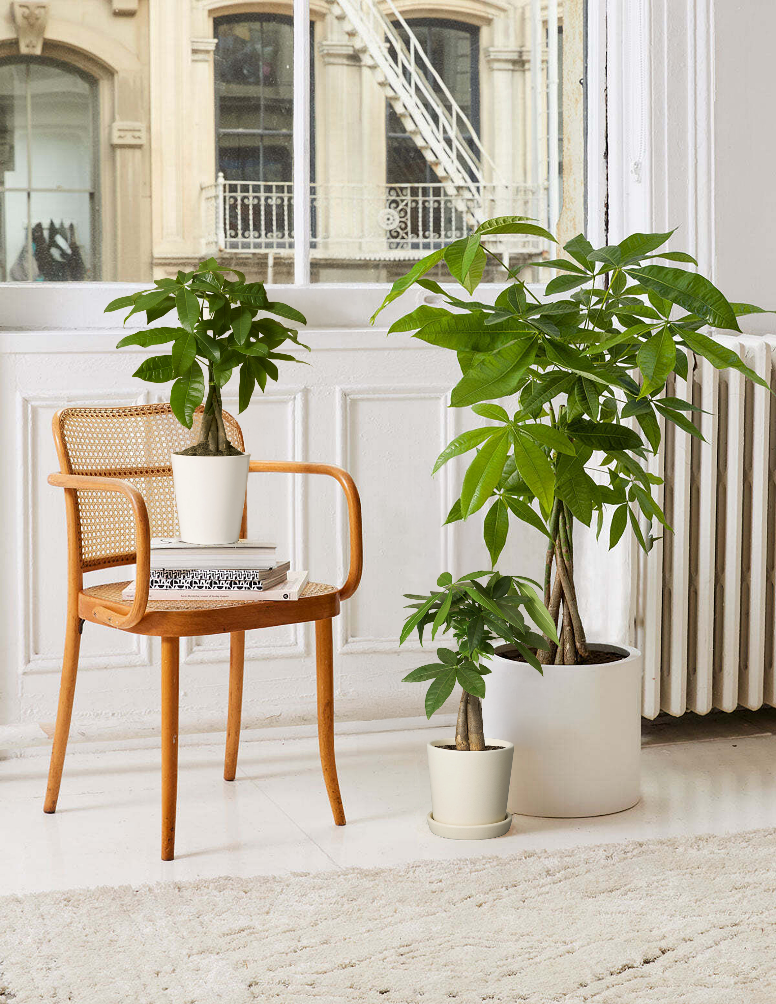
The Money Tree (Pachira aquatica)
Monthly Theme: Money, Money, Money – I want a Money Tree!
With the holidays quickly approaching you might be racking you minds for gift ideas. Well, if you have plant lovers to buy presents for, I suggest a Money Tree (Pachira aquatica). It seems today, especially amongst the younger generation, everyone wants money, cold cash, dough, loot, bucks (not the male deer), or pesos in lieu of a physical gift. Remember when The Flying Lizards sang, “Money - That’s What I Want?” Well, since rolls of cash aren’t always within our budgets, maybe a money tree will be a welcome replacement. In fact, I received mine as a gift from a friend one year when I got laid off from my job.
The money tree is a vigorous growing houseplant. In fact, it can grow up to 8’ tall. It is easy to care. It thrives with 6-hours of daily sunlight, but will tolerate low light conditions. Simply water when the soil’s top inch becomes dry to touch. They are generally sold with multiple braided stems into the trunk. The palmate leaves are glossy and the overall plant has a tropical look. Whether you are a seasoned gardener or a beginner, this adaptive plant is forgiving even when neglected by the owner.
Smarty Plants Fun Facts
Money Tree (Pachira aquatica) are in the family Malvaceae
Partial to full sun
Moist but well-drained; water less in the winter
Can grow up to 6’-8’ tall
Acidic soil pH 6.0-7.5
Fertilize with an all-purpose houseplant fertilizer in the spring/summer
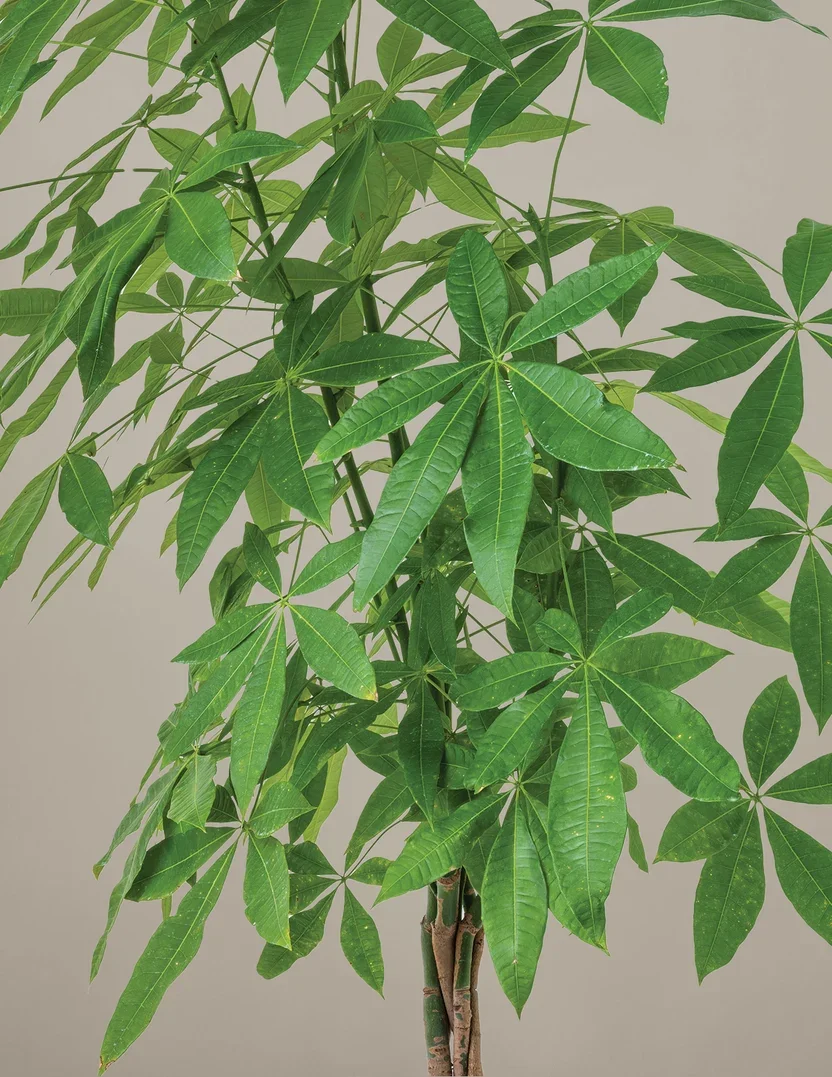
Money tree close-up view
The More You Grow
Money trees are from swampy areas of Central and South America. Other common names include Guiana chestnut and Malabar chestnut. Money trees like a room that is between 65°F-75°F and avoid placing them near cold drafts (not the beer!).
So, how do you braid the stems? When the plant is young, the stems are thin and flexible. Therefore, they are easily braided and potted together into one plant. They have to be loosely braided and use a twist tie, garden tape or twine to gently hold it together. In a few months, as the trunk thickens, it will begin to hold its shape and the binding can be removed. It’s also helpful if you use a stake to support the plant. Fortunately, money trees are sold at the nursery already braided.
Like with most plants, money trees will benefit from regular pruning. Remove the lower leaves to encourage new growth at the top of the plant. Also, dusting or showering off the leaves is a healthful practice for these plants. If you are so inclined, you can put your money tree in the shower for a thorough cleaning.
Money trees can get attacked by mealybugs or scale, which can be treated with a mild insecticide or neem oil (my personal favorite). If you notice yellow or brown leaves, you are either overwatering or under watering. How do you tell the difference? If the leaves are curling and discolored, it’s probably under watering. If the leaves are just discolored, it’s more than likely overwatering.
If the trunk seems soft or mushy, you are overwatering the plant. If you notice there is no new growth or the plant looks leggy, it needs more light. Be a good plant parent and watch over your babies (I call my plants, babies) for signs of stress or pests.
If you want to propagate a money tree, it is easiest to use a stem cutting. Wait until spring or summer when the plant is actively growing. Cut a 4-5” stem from a healthy plant, remove the bottom leaves, and place in a container of clean water. Watch for the roots to begin to grow. Once you have a solid amount of roots, it’s time to plant your new money tree.
Every few years, look to see if any roots are coming out the drainage holes or sticking out above the soil line. It you see the plant is getting root-bound, it’s time for a larger pot, but keep in mind these plants can get rather large so you might not have space for a mini-tree in your house. However, these plants generally like growing in a cozy snug-fitting container.
Folklore and Myths
The money tree is thought to bring good luck (and who doesn’t need a little good luck just about now in their lives). The plant is said to bring prosperity, good fortune, and even positive energy, which makes it an ideal gift for the New Year. The braided stems are thought to trap in good fortune. In the practice of Feng shui, this plant brings positive chi or energy into home. The leaves are grouped in five and five is a lucky number in Feng shui because there are five elements in the universe. Additionally, the braided stems are supposed to represent strength to maintain and preserve wealth. For the best or luckiest results, you are supposed to place the plant in a corner of your house.
Did you know that with proper care the money tree can live for up to a decade? Now that’s a gift that keeps on giving!
In summary, whether growing for luck or growing to enhance the beauty of your surroundings, the money tree will be a lovely addition to your home or a memorable gift. As always, thanks for reading my blog. Wherever the end of 2026 finds you, I wish for you and yours a Merry Christmas, Happy Holidays, Joyous Season, Season’s Greetings, Eid Mubarak, Happy Hanukkah, Best wishes for a joyful Diwal or Happy Kwanzaa!