
Rosemary (Salvia Rosmarinus) [previously Rosmarinus officinalis]
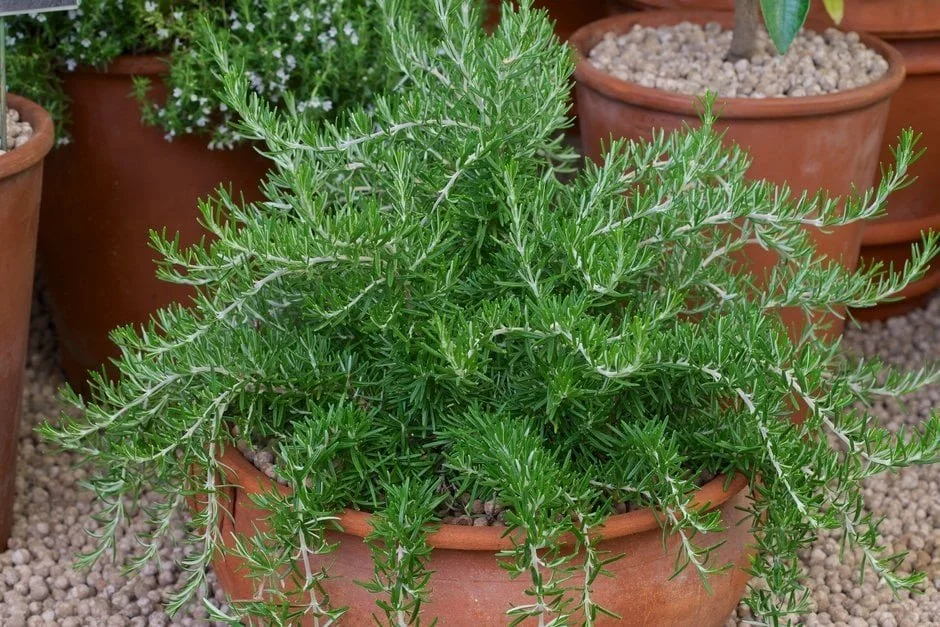
Rosemary (Salvia Rosmarinus)
Monthly Theme: Robust Rosemary
I cannot mention rosemary without immediately hearing Simon & Garfunkel singing "parsley, sage, rosemary and thyme" in their famous old song, "Scarborough Fair/Canticle." Now that I have you humming that refrain let’s talk about this amazing and useful herb. Rosemary Salvia Rosmarinus used to be called Rosmarinus officinalis. Rosmarinus is derived from the Latin words ros (“dew”) and marinus (“belonging to the sea”), which combined means “dew of the sea.” This may have something to do with the sea-blue flowers of rosemary or the ocean mists these plants thrive in on the coastal cliffs. The leading regions of rosemary production are Spain, Tunisia, and Morocco.
This versatile plant can be used for culinary, medicinal, landscaping, a muse for writers and artists, air freshener, and countless crafts. The only thing rosemary can’t do is program your Roku!
Rosemary has evergreen, super aromatic leaves and small blue, mauve, pink or white flowers. You can smell the plant when you walk near it in your garden and I’m all about fragment plants. If you are considering purchasing a plant as a Christmas gift, rosemary smells like Christmas and is a nice change from the common Poinsettia.
It likes warmth and free-draining soil, and grows well in pots or containers. However, in Ohio, rosemary needs protection in the winter. I bring my plant in during the winter. If the winter is very mild, it might survive the cold winter months. Rosemary will happily grow alongside other sun-loving herbs like hyssop, sage, and thyme.
Again, rosemary likes warm soil and dry roots to avoid root rot. So, once established, it is drought tolerant and needs little maintenance. You should prune it annually to keep it compact and bushy. If you don’t prune it, it can become woody and leggy at the base. They do have a shelf life and you will need to replace your plant with a new plant every 7-8 years. Fortunately, it’s easy to grow from cuttings so you won’t have to purchase a new plant. However, in ideal/native environments, this plant can live 30-years!
Of course, you can grow rosemary from seeds, but it will take several years for your plant to get established. It can be simply grown from cuttings or purchase a plant. Seeds would have to be started indoors until they reach 4” tall and are hardening off. Store bought plants can be planted outside in the spring as soon as the soil warms up. Select a sunny spot with free-draining soil. Rosemary can be planted in raised beds. If using a container, choose a pot that is 1’ wide with lots of drainage holes. Pot in a compost and soil mix not peat.
In the landscape, rosemary can be used to make topiaries or hedges. It looks fabulous planted along stone walls or walkways. Additionally, you can plant it in a location where it can gracefully cascade. The butterflies, bees, and hummingbirds love the spring flowers and American goldfinches enjoy the seeds.
Smarty Plants Fun Facts
Rosemary Salvia Rosmarinus are in the family Lamiaceae (Labiatae) [the mint family]
Full sun
Slightly moist, not too wet; monitor for root rot
Grow in a sand or gravel mix
Shrubs can grow 4’-5’ tall
Pests include thrips, spider mites, and white flies
General-purpose granular feed for rosemary planted in containers
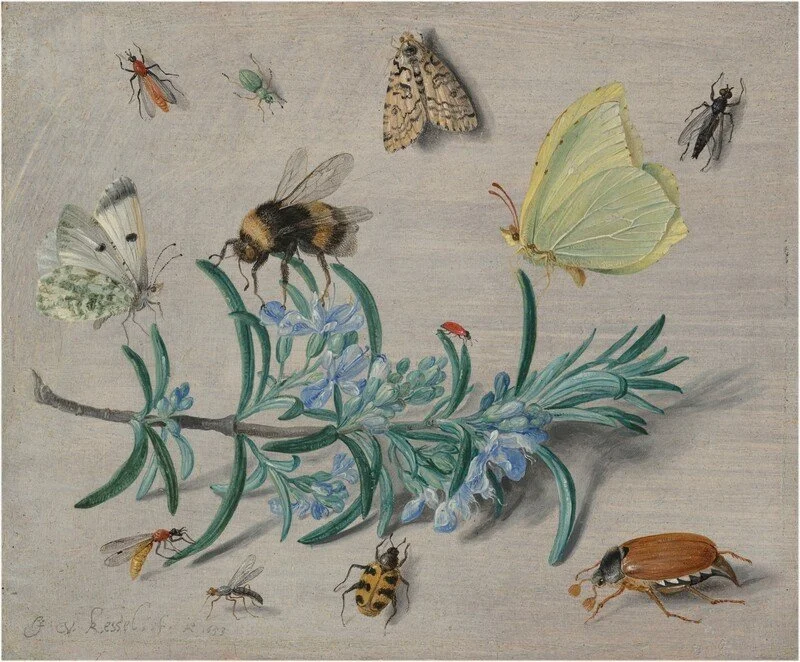
“Insects and a Sprig of Rosemary” by Jan van Kessel the Elder (1653)
The More You Grow
Rosemary is native to Africa, Europe, Western Asia, and the dry, rocky areas on the coast of the Mediterranean. Rosemary has a long history – it was used since the early Greeks and Romans. Greek scholars wore a garland of rosemary on their heads to help with their memory. In the ninth century, Charlemagne grew rosemary in his royal gardens. Napoleon Bonaparte made his cologne out of rosemary. Shakespeare mentioned rosemary in five of his plays. William Shakespeare wrote in Hamlet, "There’s rosemary, that’s for remembrance. Pray you, love, remember. And there is pansies, that’s for thoughts.”
There are several varieties of rosemary to choose from (different varieties have different flavor profiles). 'Capri' is low and trailing while 'Miss Jessopp's Upright’ is tall and upright with light blue flowers. 'Lady in White' has white flowers and 'Rosea' has pale pink flowers. 'Foxtail' is semi-trailing, low dome shape with pale blue flowers. 'Green Ginger' has a distinct gingery scent. Always purchase plants from a reputable dealer and preferably plants from Brittain.
Only harvest rosemary from well-established plants in the summer or early fall. Avoid harvesting while the plant is flowering. For the best flavor, harvest prior to flowering. Cut the stems above the woody section.
Dry rosemary quickly to help retain its color and essential oils. Long stems can be hung upside down in a dark place with air circulation. Short stems can be placed on screens for air drying. It can also be frozen, but it might lose some of its original color. Some cooks freeze rosemary with olive oil in ice cube trays for easy use.
I love to cook and also love rosemary. I know many people do not like the strong flavor of rosemary, but this herb pairs nicely with lamb, chicken, pork, fish, and beef. You can also use it sparingly in with soups, eggs, stews, kebabs, cheese, tomatoes, herbed/roasted potatoes, squashes, focaccia bread, olive oil dips, and even salad dressings. When cooking with fresh rosemary, strip the leaves from the stem and finely mince the needles by rocking your knife back and forth over the needles. Last year, I made a simple rosemary tincture to support blood flow, cognitive enhancement, and hair growth. You just add a few drops into water or juice. Rosemary leaves contain 1-2.5% essential oils and the main flavor comes from eucalyptol and alpha pinene compounds. So, the flavor profile can taste bitter, medicinal, minty or piney.
Folklore and Myths
Rosemary sprigs were placed in the hands of the deceased at a funeral because it symbolized remembrance. Brides wore rosemary at their weddings because it symbolized love, happiness, and loyalty. Biblical stories said that rosemary used to have white flowers, but the color changed to blue when Mother Mary placed her robe upon the plant during her flight to Egypt. European folklore claimed that by planting rosemary near the door or hanging it over beds it would ward off evil spirits, witches, and nightmares (just in time for Halloween!).
In ancient Egypt, King Ramesses III offered rosemary to the god Amon because they believed it strengthen their brains and memory. During Medieval times, the French used rosemary to embalm the dead. For centuries, rosemary was used in folk medicine for pain, epilepsy, dysmenorrhea, mental disorders, and infertility.
Traditionally, rosemary has been associated with love, remembrance, protection, and fidelity. Historically, in Australia and Europe, people planted rosemary around grave sites and used it during war commemorations as a symbol for remembrance.
Final thoughts, if you want to start an herb garden, start with the basic herbs – parsley, sage, rosemary, and thyme (just like the song). Once you grow and cook with your own fresh herbs, you will never go back to the grocery store to buy an overpriced package of wilted cilantro. If you enjoy cooking, you need to grow your own fresh herbs (hashtag Fresh Herbs!).
Lastly, this month I have a book recommendation for you, "The Light Eaters: How the Unseen World of Plant Intelligence Offers a New Understanding of Life on Earth" by Zoë Schlanger. My brother let me borrow his copy and it was a delight. For all gardeners, plant lovers, tree huggers, respecters of Mother Nature, curious minds...this is a book for you!