
Campanula punctata “Spotted bellflower”
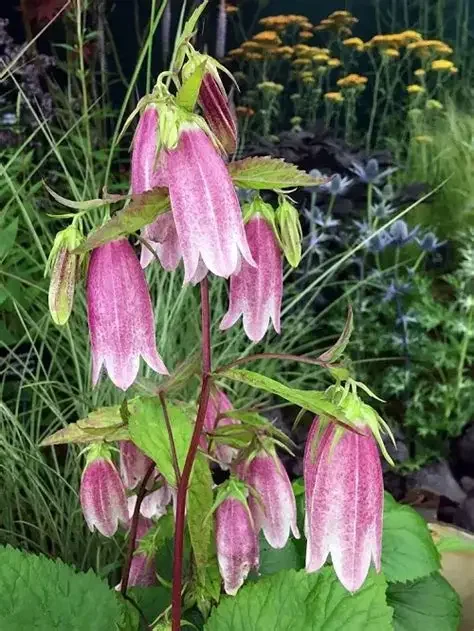
Campanula punctata “Spotted bellflower”
Monthly Theme: “Bell of the Ball” Bellflowers!
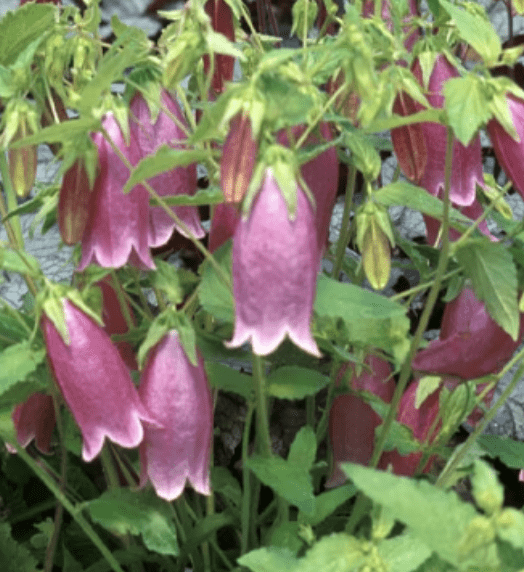
When you hear someone say Campanula or bellflower, you might quickly picture one of many flowering plants. That’s because there is a wide array of flowers that fall under the category of Campanulas and/or bellflowers. Actually, there are over 500 species under the genus Campanula. I purchased my original plant from the Kent Community Garden annual plant sale many years ago and the seller just called them Pink Campanula Bellflowers. From my research, I concluded the variety I have is Campanula punctata “Spotted bellflower.” They have quickly spread and filled in a 6’ x 6’ area and are truly the “Bell of the Ball’ in that corner of my yard!
Campanula punctata “Spotted bellflower” belong to the Campanulaceae bellflower family. They are a clump-forming upright perennial. They are native to East Asia (China, Japan, and Siberia). The Latin name for genus Campanula means "bell" and punctata means "spotted," which refers to the bell-shaped tubular flower with spotted markings inside the pink flowers. The large drooping pale pink flowers can reach 2" long. The stems grow from basal rosettes and the medium sized green leaves are toothed.
This plant can grow 1-2’ tall bringing interest to any garden. Mine bloom in late spring and if I deadhead the spent flowers, they will offer a second bloom in late summer. They thrive in well-drained soil with full to partial sun.
They self-seed and spread by rhizomes. You can also propagate by dividing sections every 3-4 years in early spring or late fall. I’ve been selling mine this year since they have grown so aggressively. They die back in the fall/winter so they require some clean-up effort to remove the dead debris.
These showy flowers would look great in any cottage or rock garden or as a natural border.
Campanula punctata is not known to be toxic to humans or pets. They have few insect, disease, and deer problems. However, as I mentioned earlier, they do spread rapidly. If you are looking to fill in a flowerbed, these are the plants for you. If you are looking for a plant that will basically remain a singular plant mass, go for the Physostegia virginiana “Obedient Plant” instead.
Smarty Plants Fun Facts
Campanula punctata are in the family Campanulaceae
Full sun (6 hours) to part shade
Bloom June to July
Height .75-2’ and spread .75-1.5’
Grow in acid, neutral, and alkaline loamy soils
pH 6.5l
“A man asked a gardener why his plants grew so beautifully. The gardener said, “I don’t force them to grow. I remove what stops them.”” Unknown
The More You Grow
This flower goes by a lot of common names such as Spotted Bellflower, Chinese Rampion, Prickklocka, Canterbury Bells, Campanula hybrida, Campanula nobilis, Campanula takesimana, and Campanula violae. Maybe they are in the witness protection program!
Another variety is Campanula 'Rubrifolia,’ which has intense ruby blooms that reach 2.5" long. “Cherry Bells” have a cherry-red shaded flower. “Pink Chimes” and “Pink Octopus”‘ are two more options available to you. The flowers on Pink Octopus are so deeply divided that they look like little octopus arms.
In European folklore, Spotted bellflowers represent loyalty, gratitude, humility, and constancy. They further symbolize secret passions or endless love. In Poland and Ukraine, Campanula rapunculoides is used as a medicine for skin inflammation.
In Japanese folklore, Campanula signifies grace, beauty, and life transitions. The name for Spotted bellflower in Japan is hotaru-bukuro, which means firefly bag because they believed that fireflies could be found within the bell-shaped blossoms. in Buddhist temples, white varieties are used for purification rituals while the pink variants are used in wedding ceremonies.
In Scottish tradition, white Campanula flowers convey purity and remembrance. In Scotland and Ireland, they call this plant witch’s thimble and fairy thimble. Folk tales say that the bellflowers ring when fairies pass,
In conclusion, if you are looking for a carpet of pink bell-like flowers dancing across your garden bed, introduce the “Bell of the Ball,” Campanula punctata “Spotted bellflower” to your landscape.