
Palm trees (Arecaceae family)
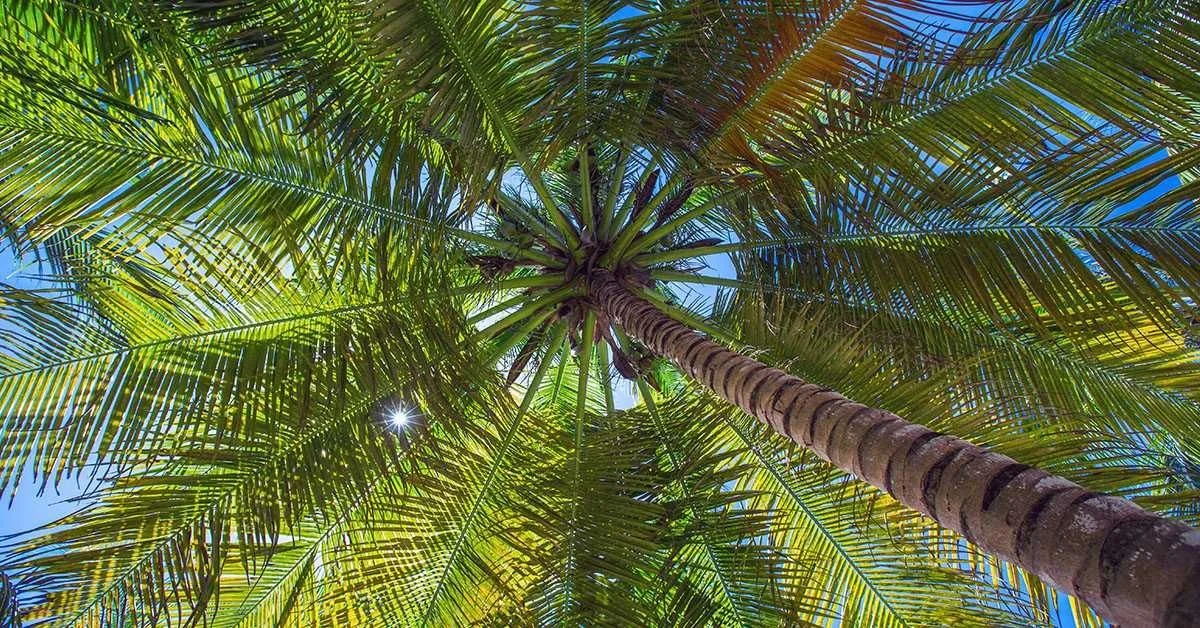
Monthly Theme: Palm trees (Arecaceae family)
Aloha and greetings from Hawai’i! In March, I was fortunate enough to take a trip to Honolulu, O’ahu. I was so moved by the various palm trees that shaded and swayed above us on our trip. Consequently, this month, I decided to take a detour from our normal discussion about plants suitable for Northeastern Ohio to highlight a variety of palm trees found on the islands. I invite you to travel with me some 4,503 miles southwest (and yes, we flew on Southwest Airlines) to the tropical island of O’ahu and discover some of the most common palm trees thriving on O’ahu.
If you are anything like me, whenever I see a picture of a palm tree, I immediately imagine a tropical vacation with white-sand beaches, teal-blue oceans waters, and pristine temperatures. Truly, they should have a photo of a palm tree next to the word paradise in the dictionary!
Palm trees are evergreen and belong to the Aceraceae family. They have fan-like (palmate) or feather-like (pinnate) fronts and are predominately branchless. Let’s not forget the beautifully patterned and/or fibrous trunks, which are an artistic delight. Most palms need a tropical climate to survive, but some can tolerant cold weather as low as 5-20 degrees F (USDA zones 7b-8).
Some varieties are fruit-producing palms (Date palms and Coconut palms) produce edible fruits, milks, and used for palm oils while other palms are strictly ornamental. The palm wood is also used for make furniture (such as wicker).
Believe it or not there are over 2,600 species of palms. The Dwarf palm (Phoenix roebelenii) grows to 6’ tall while the Wax palm can reach 200’.
In this blog, I am going to feature five of the most popular palm trees on the Hawaiian Islands. There are hundreds of varieties of palm trees in Hawai’i, but fear not – we are not going to review all of them! Remember to break them down into two categories pinnate where the leaves look like long feathers and palmate where the leaves resemble fans.
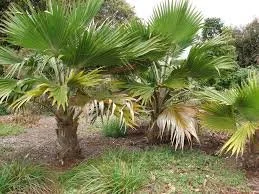
Loulu (Pritchardia remota)
I was surprised to learn that the Loulu (Pritchardia remota) is the ONLY palm tree native to Hawai’i. It is a palmate and is known as the Fan Palm. The top of the leaves are emerald green to grayish or bluish green leaves with a waxy grayish green cast. They can grow 4-11’ tall depending on the species.
The fruits are called hāwane and were peeled and eaten by early Hawaiians. The taste is similar to coconut. The fronds (leaves) are called lau hāwane and were used by the early Hawaiians for thatching.
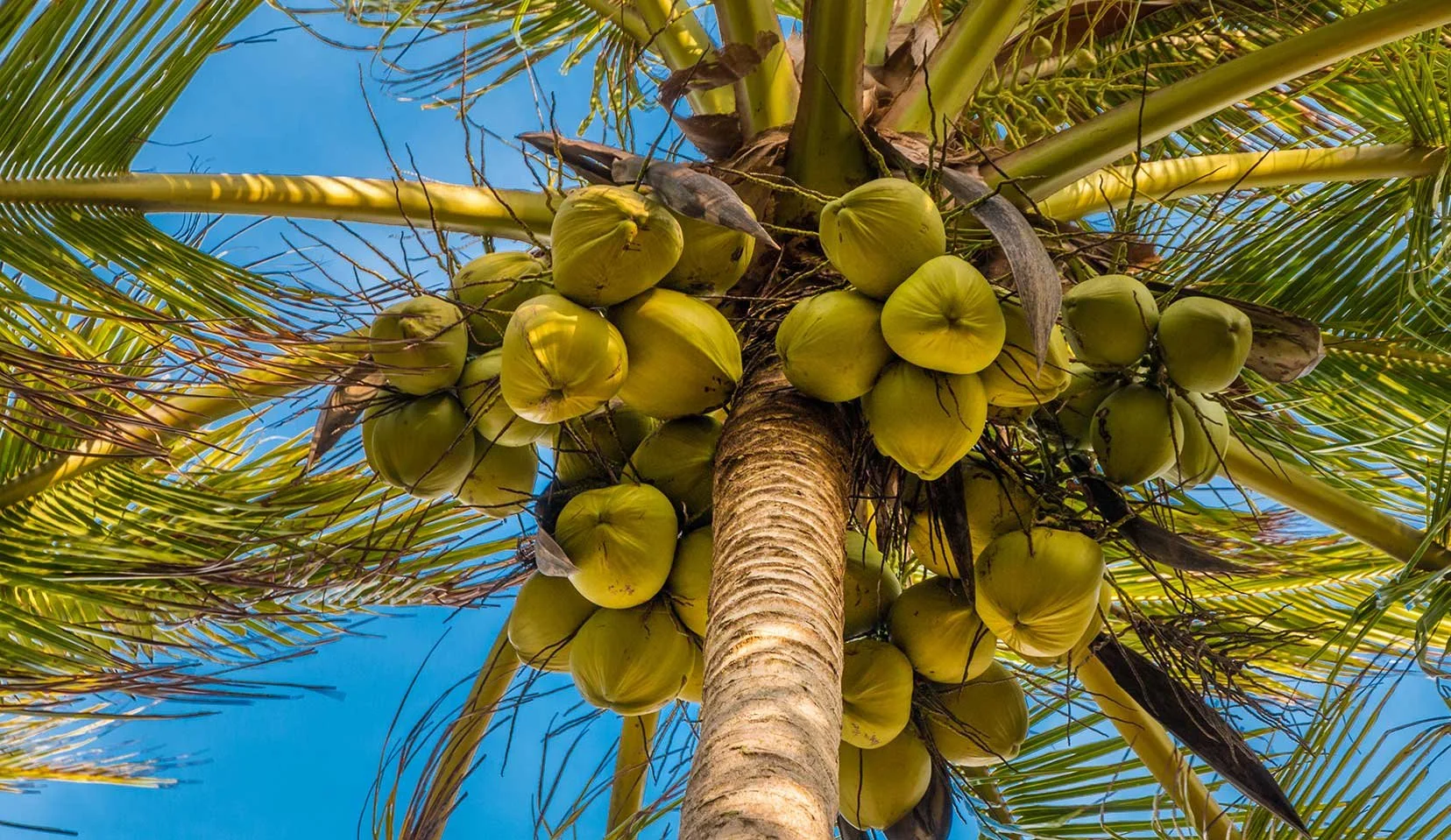
Coconut Tree (Cocos nucifera)
The Coconut Tree (Cocos nucifera) is native to Southeast Asia, is a pinnate, and can grow up to 50’ tall. Due to the many beneficial uses, it is known worldwide as the tree of the necessities of life, the tree of a thousand uses, and simply the tree of life. It is arguably one of the most useful trees in the world.
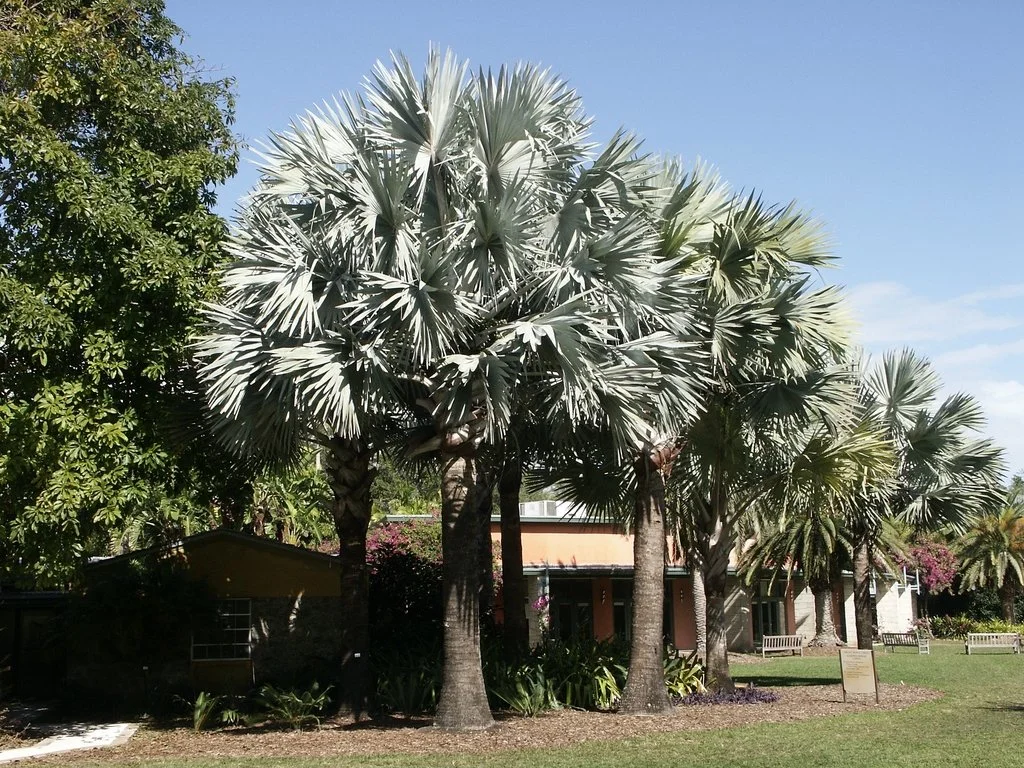
Bismarck Palm (Bismarckia nobilis)
The Bismarck Palm (Bismarckia nobilis) is also native to Southeast Asia. It is a palmate that grows 10-40’ tall. Also known as Medemia nobilis (nobilis is Latin for noble). It has magnificent silver-blue leaves which truly sparkling in the landscape. Historically, Bismarck was used for crafting baskets
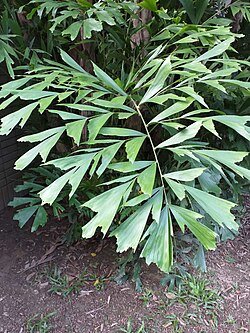
Fishtail Palms (Caryota mitis)
The Fishtail Palms (Caryota mitis) is native to Asia, North Australia, and the South Pacific (quite possibility originated in Vietnam). It is a pinnate and the leaves look like a fishtail. It can grow 8-11’ tall. Purple flowers hang down like spikes, but the fruit is harmful to humans.
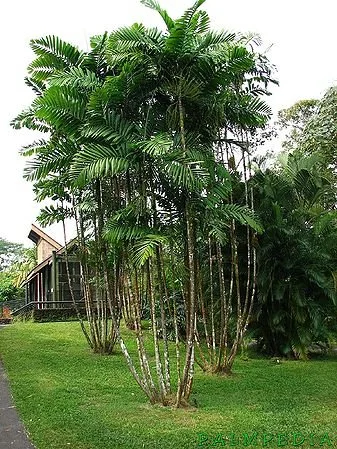
MacArthur Palm (Ptychosperma macarthurii
The MacArthur Palm (Ptychosperma macarthurii) is native to Australia, it is a pinnate, and grows up to 33’. It grows in dense multi-stemmed clusters and adores the damp rainforests of Australia. Small, white flowers appear yearly at the base of the crown and when ripe they turn into bright red fruit, which the birds love to feast upon.
THE MORE YOU GROW
Most palm trees prefer warm, sunny environments.
Well-draining soil helps prevent root rot.
Keep soil slightly moist but avoid overwatering.
Use balanced fertilizers during the growing season.
Pruning and trimming keeping palm trees healthy.
In summary, palm trees are quite versatile, strikingly gorgeous, and an economically valuable natural resource. If you ever get a chance to take a trip to Hawai’i to check out the palm trees and more, I highly recommend it!
Aloha!
Judith